
The Illusion of Freedom: How New Technologies Don't Always Reduce Workload

Opinion
If you spend a few minutes listening to today’s discussions about artificial intelligence and other emerging technologies, you'll hear a familiar promise: these innovations will create unprecedented abundance, allowing people to work less or even not at all. This vision is appealing, but it isn't new. History shows us that while new technologies often boost productivity and transform industries, they rarely reduce the total amount of work people do. Instead, they change how people work, raise expectations, or shift who benefits from the gains.

In 1930, economist John Maynard Keynes predicted that technological progress would eventually allow people to work as little as fifteen hours per week. Nearly a century later, productivity has increased beyond what Keynes could have imagined, yet the average workweek remains far longer. The prediction wasn't irrational; it assumed that productivity gains would naturally translate into leisure. History suggests the relationship is far more complicated.
The Industrial Revolution and the Promise of Freedom
The Industrial Revolution introduced mechanized factories that dramatically increased productivity. Many believed machines would reduce the burden of physical labor and improve living standards.

Instead, factory workers often faced longer hours and stricter conditions. The machines increased production capacity, and factory owners expected workers to keep pace. Twelve- to sixteen-hour workdays became common.
The machine did not free the worker; it set the rhythm. Workers became cogs in a faster-moving system, often with less control over their time.
Historian E.P. Thompson, in Time, Work-Discipline, and Industrial Capitalism, argued that industrialization transformed time from something task-oriented into something measured by the clock. Industrialization fundamentally changed the way people thought about time. As Thompson famously said, "Time is now currency: it is not passed but spent."
For many workers, the hoped-for reduction in labor never materialized. Productivity soared, but so did expectations for output.
Electricity Changed Production but Not Work Hours
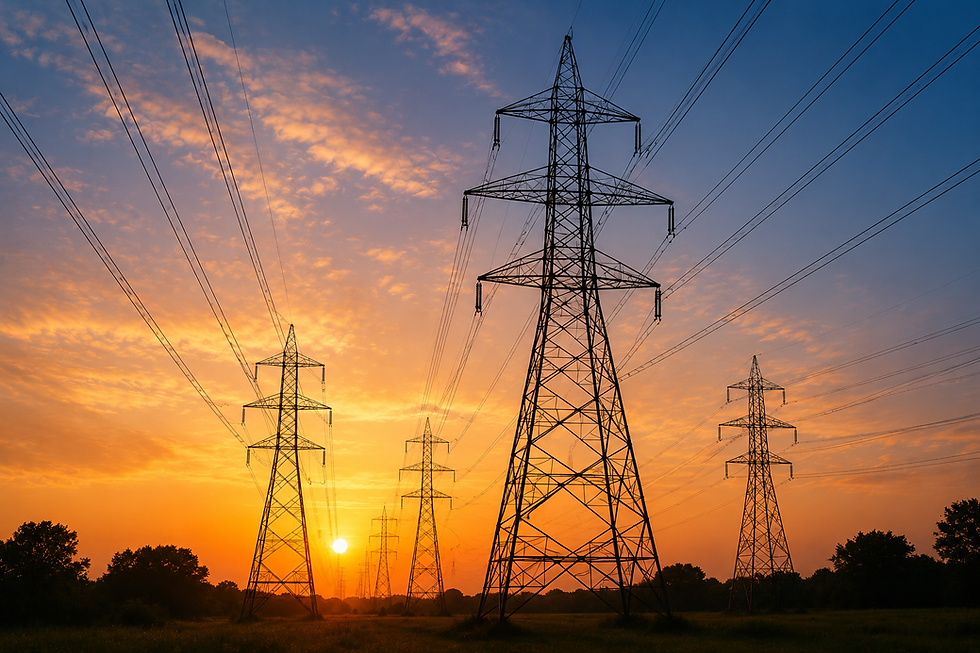
Electricity transformed manufacturing by making production faster, cleaner, and more efficient. Factories could operate longer hours and produce more goods with less physical strain on workers.
However, this did not equate to leaving early and enjoying more leisure time. Instead, factories extended their operating hours. The gains in efficiency were used to increase output, not reduce work hours. Expectations rose, and workers often found themselves working longer shifts.
Electricity improved conditions and productivity but did not deliver on the promise of reduced workload.
Household Appliances and the Myth of Less Work
Household appliances like washing machines and vacuum cleaners were marketed as tools to free women from endless housework. Advertisements promised more leisure and less time spent on chores.

Historian Ruth Schwartz Cowan’s research in More Work for Mother reveals a different story. As appliances made tasks easier, standards rose. The work itself changed. Clothes were washed more often, homes were kept cleaner, and expectations for household upkeep increased. Technology reduced the effort required for individual tasks, but it also raised expectations about what constituted a well-run household.
Rather than reducing workload, appliances changed the nature of housework and raised the bar for cleanliness and care.
Why Technologies Fail to Reduce Workload
Several factors explain why new technologies rarely reduce total work time:
Increased Expectations: When productivity rises, employers or society often expect more output, not less work.
Changing Standards: Easier tasks lead to higher standards. For example, faster cleaning means people clean more often or more thoroughly.
Shift in Who Benefits: Productivity gains often increase profits or wealth for owners rather than reducing workers’ hours.
New Types of Work: Technologies create new jobs or tasks that replace old ones, keeping total work time steady.
What This Means for Today’s AI Revolution
The current wave of AI promises to automate many tasks and create abundance. But history warns us to be cautious. AI may change how we work and what work looks like, but it may not reduce the total hours we spend working.
We should ask:
Will AI raise expectations for output and speed?
Will new tasks emerge that fill the time saved?
Who will benefit from AI-driven productivity gains?
Understanding these questions can help society shape policies and practices that truly improve work-life balance.
MIT economist David Autor, in Why Are There Still So Many Jobs?, has argued that automation has historically created as well as eliminated work, complementing human labor in ways that generate new industries and occupations. Yet even if new jobs continue to emerge, the broader question remains: why have decades of extraordinary gains in productivity not translated into substantially less work for most people? If technology continues to expand what a single person can accomplish, but expectations, competition, and economic incentives expand just as quickly, perhaps the problem is not the technology itself, but the systems and incentives surrounding it.
AI: The New Industrial Revolution?
It's evident that the Industrial Revolution and AI have the following in common:
Automate(d) human labor
Dramatically increase(d) productivity
Disrupt(ed) the job market and the ways we work(ed)
Create(d) new industries
Concentrate(d) economic power
Raise(d) expectations - more goods, faster turnaround, more content, etc.
Create(d) the expectation of more leisure time and abundance
However, comparing the two greatly understates AI's significance and impact which exceeds that of the Industrial Revolution. The Industrial Revolution largely mechanized physical labor, enabling machines to perform work that once required human muscle. AI, by contrast, is beginning to automate aspects of human cognition itself such as reasoning, writing, analysis, coding, design, and decision support. If the steam engine amplified physical capability, AI has the potential to amplify, or in some cases replace, intellectual work across nearly every sector of the economy. That alone makes it uniquely disruptive.
And AI's greatest impact may extend beyond employment. Increasingly, AI is being integrated into the systems that determine access to information, financial services, healthcare, education, and even public benefits. If decision-making becomes concentrated within opaque, AI-driven systems, the question is no longer simply whether AI will replace jobs, but how much influence it will have over the opportunities and resources people depend on in everyday life. History suggests that every major technological revolution redistributes power. The question is whether AI will merely increase productivity or fundamentally reshape who controls access to the benefits that productivity creates.

Perhaps the promise of technology was never simply to reduce work. Perhaps the more important question is who benefits from the productivity it creates, and whether we are willing to use those gains to buy more output, or more freedom.
References:
Keynes, John Maynard. Economic Possibilities for our Grandchildren. 1930.
Thompson, E.P. Time, Work-Discipline, and Industrial Capitalism. Past & Present, No. 38 (Dec. 1967), pp. 56–97. DOI: https://doi.org/10.1093/past/38.1.56
Cowan, Ruth Schwartz. More Work for Mother: The Ironies of Household Technology from the Open Hearth to the Microwave. New York: Basic Books, 1983.
Cowan, Ruth Schwartz. "Less Work for Mother." American Heritage. https://www.americanheritage.com/less-work-mother
Autor, David H. "Why Are There Still So Many Jobs? The History and Future of Workplace Automation." Journal of Economic Perspectives, Vol. 29, No. 3 (2015). https://www.aeaweb.org/articles?id=10.1257%2Fjep.29.3.3


